Hydroseeding: A Faster Path to Healthy Turf
Bare soil rarely stays where you want it. After grading, excavation, or drainage work, an exposed slope or lot becomes vulnerable to erosion, weed invasion, and runoff that carries valuable topsoil into ditches and storm drains. Establishing a dense stand of grass quickly is the most reliable way to lock soil in place and restore a finished appearance. Hydroseeding is the method we turn to when speed, coverage, and germination consistency all matter at the same time.
At CS Gruter LLC, we apply hydroseeding as part of our broader excavation and site work throughout Lebanon, Mason, Wilmington, Loveland, West Chester, and Morrow, OH. Because we often disturb soil during grading, septic installation, and drainage projects, we understand how important it is to stabilize that ground before the next rainfall. Hydroseeding lets us close out a project with a uniform seedbed that begins growing in days rather than weeks, protecting both the land and the investment our customers make in their property.
How the Hydroseeding Process Works
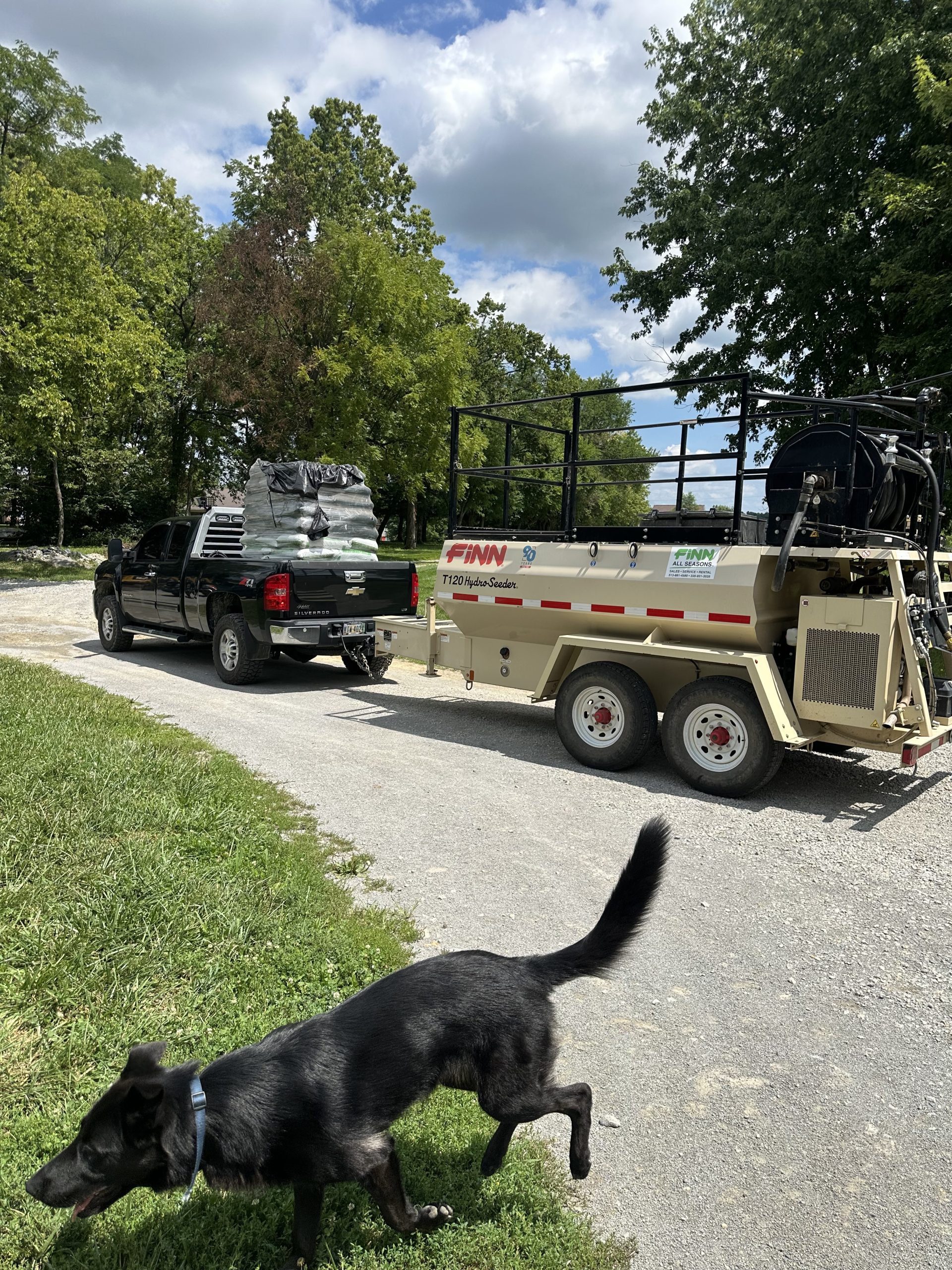
Hydroseeding, sometimes called hydraulic mulch seeding, combines seed, water, fiber mulch, tackifier, and fertilizer into a single slurry. That slurry is mixed in a tank equipped with a paddle agitator or jet recirculation system, then sprayed under pressure across the prepared soil. The result is an even blanket of green material that holds moisture against the seed and shields it from wind and washout. This approach outperforms broadcast seeding because every square foot receives a measured, consistent dose of all the ingredients needed for germination.
Before we ever load the tank, we prepare the ground properly. Good soil contact is the single biggest factor in successful establishment, so we address it methodically. Our typical field sequence looks like this:
- Site evaluation: We assess soil type, slope, sun exposure, and drainage to select the correct seed blend and mulch loading rate.
- Soil preparation: We loosen compacted areas, rake out debris and large rocks, and grade the surface so water drains as intended rather than pooling.
- Slurry mixing: We measure seed, fertilizer, wood or paper fiber mulch, and tackifier to match the specific job conditions.
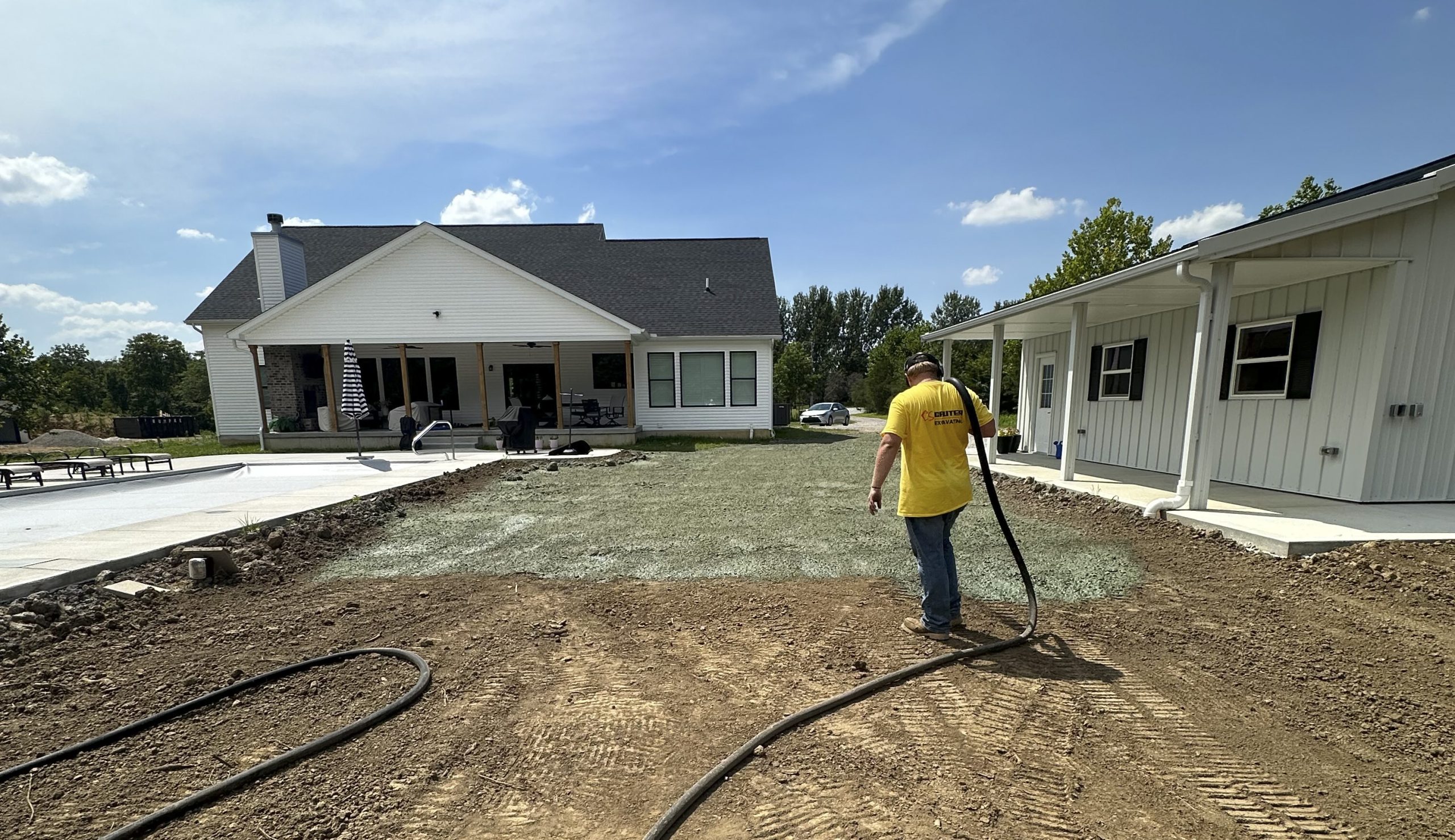
- Application: We spray the slurry evenly, adjusting nozzle distance and angle to cover slopes and hard-to-reach corners without gaps.
- Follow-up guidance: We advise on watering schedules and the timing of the first mow so the new turf roots deeply.
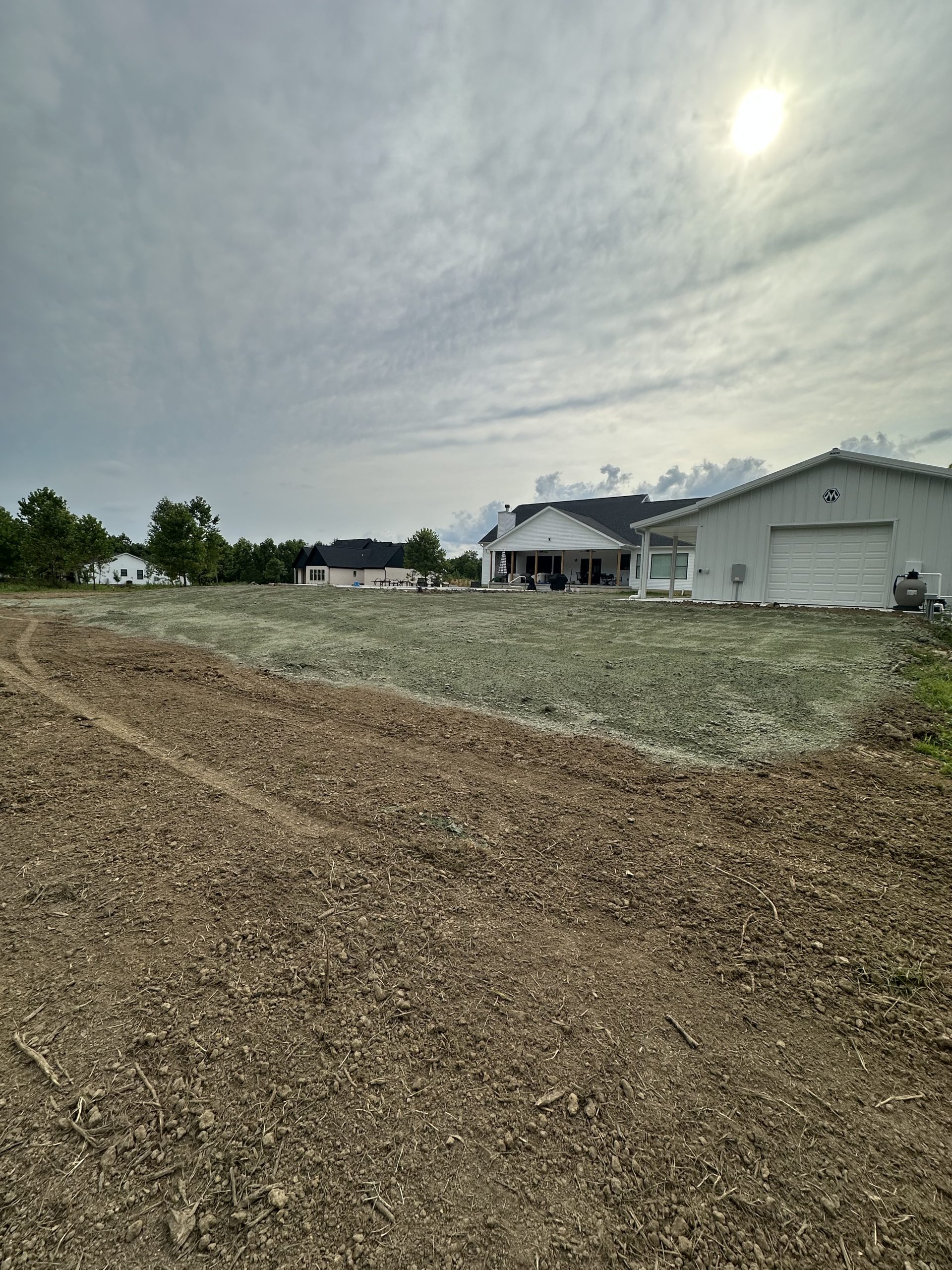
The color of the mulch tint serves a practical purpose beyond looks. The green dye acts as a visual tracer, letting our crew see exactly where the slurry has landed and where it has not. This eliminates the thin patches and skipped strips that plague hand seeding, and it gives the finished project a clean, uniform appearance right from the start.
Where Hydroseeding Solves Problems
Not every seeding job is the same, and part of our work is matching the technique to the challenge in front of us. Across our service area of Lebanon, Mason, Wilmington, Loveland, West Chester, and Morrow, OH, we see the same recurring situations where hydroseeding delivers results that other methods struggle to match.
Erosion control on slopes and embankments is one of the most common reasons customers call us. Steep grades left bare after excavation shed water quickly, and loose soil moves with it. The fiber mulch and tackifier in a hydroseed slurry bond to the surface and form a protective mat that resists rain impact while seed germinates. On aggressive slopes we increase the mulch loading rate and add extra tackifier to hold everything in place through heavy weather.
Large-area lawn establishment is another natural fit. Sodding an entire acre is expensive and labor intensive, while hand broadcasting struggles to cover that much ground evenly. Hydroseeding covers wide open areas quickly and economically, making it ideal for new home lots, subdivision common areas, and rural properties. The uniform coverage produces turf that fills in evenly rather than in scattered clumps.
Restoration after excavation and utility work ties directly into the services we already provide. When we complete a septic installation, drainage project, or grading job, the disturbed ground needs to be returned to a stable, vegetated state. Hydroseeding lets us close the loop on our own excavation work so customers do not have to hire a separate contractor to finish the surface.
Reseeding thin or damaged turf rounds out the list. Not every lawn needs a full replacement. Where existing grass has thinned from drought, traffic, or shade, an overseeding pass with a hydroseed slurry can revive coverage without tearing out what is already there.
Technical Specifications That Matter
The quality of a hydroseed application depends on getting the ingredient ratios right for the conditions. We do not use a single generic mix for every job because soil, slope, and climate vary from one site to the next. The core components each play a distinct role, and understanding them helps explain why professional application produces better results than a rented consumer sprayer.
- Fiber mulch: Wood fiber holds more moisture and lasts longer than paper fiber, which makes it the better choice for slopes and drought-prone sites, while paper blends work well for flat, low-risk areas.
- Tackifier: This natural or synthetic glue binds the slurry to the soil, preventing wind and water from displacing seed before it roots – the loading rate rises with the steepness of the grade.
- Seed selection: We choose blends suited to Ohio conditions, balancing cool-season grasses for durability with faster-germinating varieties that provide quick initial cover.
- Starter fertilizer: A measured nutrient charge supports early root development without burning tender seedlings.
Application rate is expressed in pounds of mulch per acre, and we calibrate our equipment to hit the target consistently across the entire job. Too little mulch leaves seed exposed, while too much can smother germination. The pressure and nozzle configuration also change depending on distance and terrain, allowing us to reach the top of a berm or the far edge of a lot without overspraying areas that need lighter coverage.
Watering and Establishment After Application
Even a perfect application depends on proper aftercare, and the first two to three weeks are the most important. The mulch mat holds moisture, but it cannot replace watering entirely. We advise customers to keep the seedbed consistently damp, watering lightly and frequently rather than heavily and rarely. Once seedlings emerge and reach mowing height, watering can taper toward a deeper, less frequent schedule that encourages roots to grow downward and build drought resistance.
Germination timing varies with temperature and grass type, but most blends begin showing green within one to two weeks under favorable conditions. We generally recommend waiting until the new grass reaches around three inches before the first mow, and cutting no more than a third of the blade height at a time. Following these steps protects the young turf during its most fragile stage and rewards the effort with a thick, established lawn.
Why Choose CS Gruter LLC for Hydroseeding
We are Cincinnati’s premier excavation company, rooted deep in the heart of Ohio and dedicated to reshaping the landscape of our city and its surroundings. That excavation background gives us an advantage on hydroseeding work, because we understand grading, soil behavior, and drainage as thoroughly as we understand seed and mulch. When we prepare a site, we know how water will move across it and how to grade the surface so the new turf thrives.
Our mission stays the same across every service we offer: top-notch work delivered with the highest standards of safety, integrity, and environmental responsibility. Every project begins with a meticulous safety review, and our team follows industry best practices on the ground. Because Cincinnati is our home, we use eco-friendly techniques that limit disruption to the local ecosystem, and hydroseeding fits that commitment naturally by controlling erosion and reducing runoff.
Whether you need to stabilize a freshly graded slope, establish a full lawn on a new property, or restore ground after septic or drainage work, CS Gruter LLC has the equipment and experience to get grass growing quickly and evenly. Reach out to discuss your project, and we will recommend the seed blend, mulch loading, and preparation approach best suited to your site throughout Lebanon, Mason, Wilmington, Loveland, West Chester, and Morrow, OH.